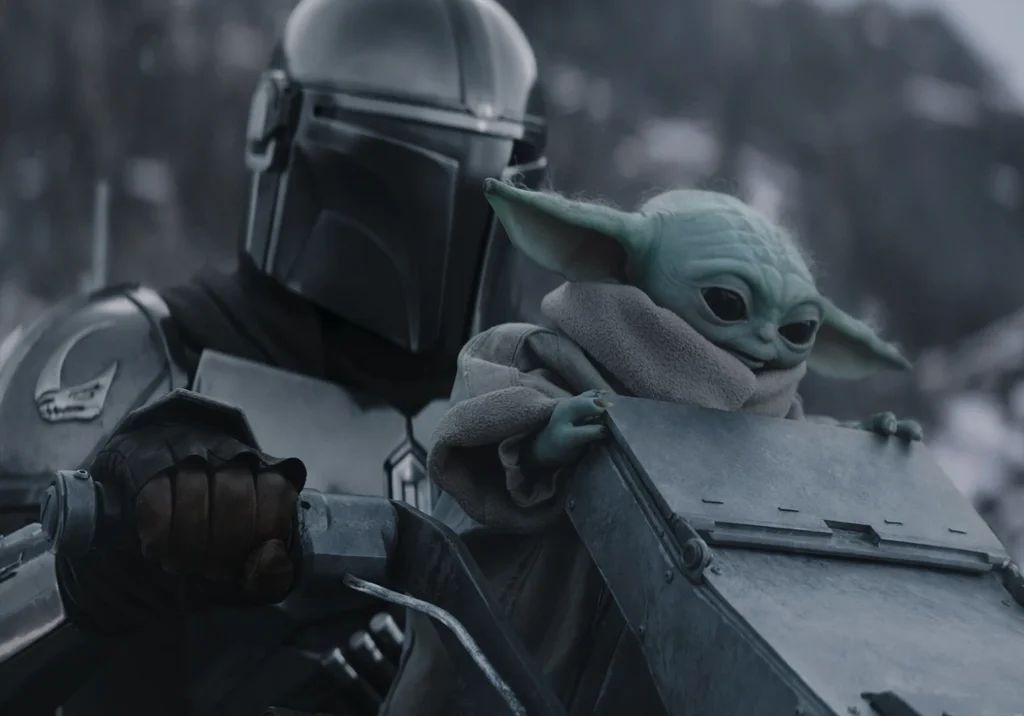

Mandalorian Season 4 is out on JioHotstar. Oops, sorry. Did I just say Mandalorian Season 4? No, it’s Star Wars: The Mandalorian and Grogu, the movie. But why?
I mean, don’t get me wrong. It’s not a bad movie at all. It’s pretty decent. It has its high points and it has a few low points. But I honestly think it could have worked better as a series.
You know, we already had three seasons. Because of that buildup, when Disney announces a Mandalorian movie, you naturally expect something big. You expect the story to justify leaving Disney+ and Jiohotar in india and coming to theatres.
But while watching it, you start feeling that it’s basically one Mandalorian and Grogu adventure just stretched into a two-hour movie. I could literally feel it while watching the movie — yeah, episode one is done, episode two is done, episode three is done. I could see it.
Since it was written for a series, it makes sense. You can actually feel that structure while watching the movie.
Even in the series, you’d occasionally get some big names making cameo appearances. Luke Skywalker had a cameo; Ahsoka Tano had a cameo. So naturally, you go into the movie expecting it to be on a much bigger scale. You expect everyone to come together, something big to happen, something that matters to the larger Star Wars universe. But yeah, you know the answer to that
That was a big topic even when the movie was released in theatres. And even if you’re watching it for the first time on OTT, I think that’s still the first thing that comes to your mind.
But as I said before. This is not a bad movie at all. It’s a pretty decent movie. And if you ask me what the biggest reason for turning this into a movie instead of continuing it as a series was, I would say it’s Grogu’s immense popularity.
We all know how big of a sensation Grogu has become worldwide. So I genuinely feel like they wanted to milk that popularity by bringing The Mandalorian to the big screen. And honestly, that part absolutely works. Whatever Grogu does in this movie is on another level of cute. You just can’t help but enjoy him.
And at some point, you also understand why the movie is called The Mandalorian and Grogu instead of just The Mandalorian. After the first half, you start understanding why Grogu is equally important to the story and why his name is right there in the title. I obviously don’t want to spoil what happens, but once you get past that point, the title makes a lot more sense.
If you’re an action lover, this movie is a treat as well. There are ample action scenes with some brilliant choreography, and I think action lovers are really going to enjoy that part of the movie.
But if you ask me, the real highlight of the movie is the cinematography and the music. The cinematography is brilliant, and the music elevates so many scenes. Ludwig Göransson delivers once again.
The graphics are great too. I mean, you can never really complain about the CGI in a Star Wars movie, and this one is no different. The VFX looks really good.
Setting the Scene
- Director: Jon Favreau
- Cast: Pedro Pascal, Jeremy Allen White, Sigourney Weaver, Jonny Coyne
- Music: Ludwig Göransson
- Cinematography: David Klein
- Runtime: 132 minutes
- Theatrical Release: May 22, 2026
- Streaming Since: September 2, 2026, on JioHotstar(India)
- Languages: English, Hindi
The Story: Mando and Grogu’s New Republic Mission
The story picks up from where The Mandalorian Season 3 ended. Mando and Grogu are now working as bounty hunters for the New Republic, taking on contracts to hunt down former Imperial leaders. Over time, Mando has earned the trust of the New Republic, and they have started seeing him as one of their own.
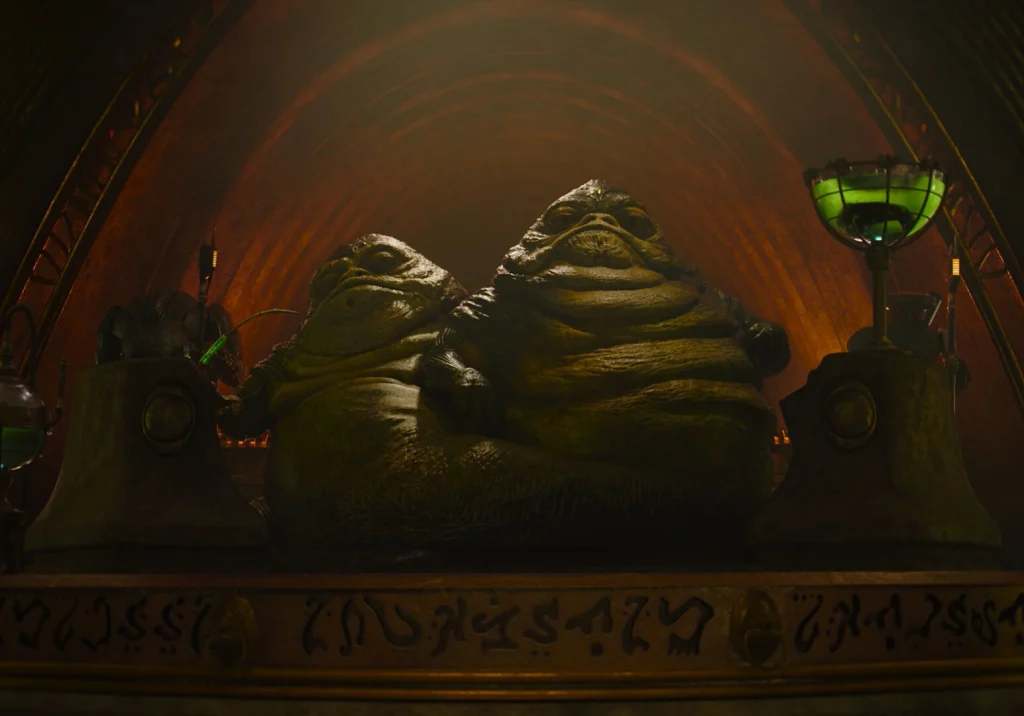
While all of this is happening, Mando gets a new mission. He is hired to rescue Rotta the Hutt, the son of Jabba the Hutt. Rotta’s uncle and aunt, the Hutt twins, hire Mando through the New Republic, and he sets out to bring Rotta back.
But that’s where the mission takes a completely different turn.
And that’s basically where the main story of The Mandalorian and Grogu begins.
Technical Highlights: Cinematography and Ludwig Göransson’s Score
One of the biggest highlights of this movie is definitely the cinematography and VFX. Honestly, people who watched this in theatres were lucky because the grand visuals make a solid case for a big-screen watch. Right from Mando’s opening scene, the entry is proper fire. It gives you that full mass, commercial hero intro vibe, and David Klein’s camera work and lighting play throughout the movie are brilliant.
And then, of course, there’s Ludwig Göransson. For me, after Hans Zimmer, Ludwig is the real genius right now. The moment you see his name as the music director, the hype automatically goes up, and he just delivers every single time.
What I really love about his score here is how he elevates scenes. Usually, Hollywood movies don’t use background score to hype up scenes the way Indian movies, especially South Indian cinema, do. But Ludwig gets that exact pulse. He takes important action blocks, pumps up the scene with epic elevation music, and gives you themes that actually stay stuck in your head long after the movie is over.
Grogu: The Real Star of the Show
I mean, come on. Whatever he does is so cute. If you ask me, he is the whole movie.
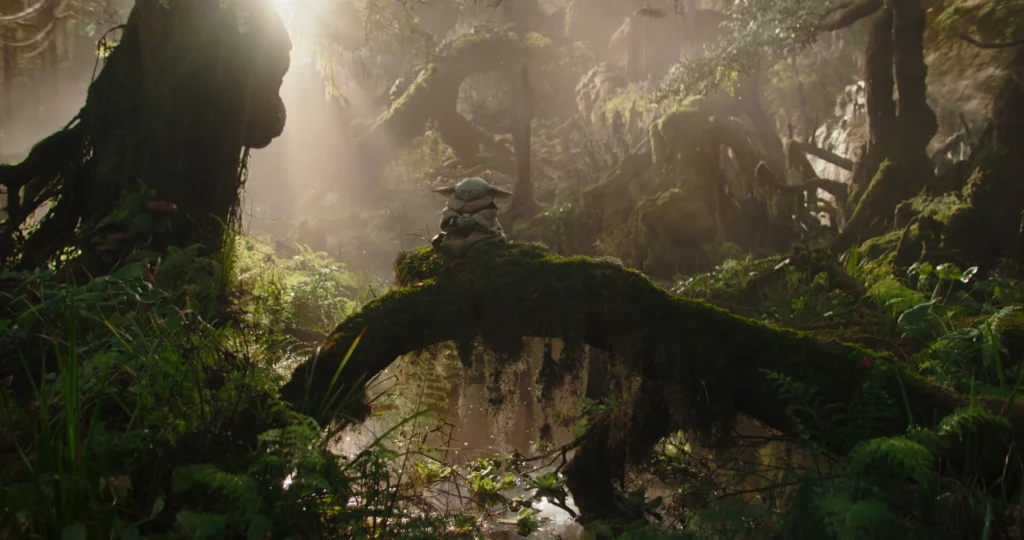
If you laugh at some scenes, it is probably because of Grogu. And the funny thing is, even if you watch this movie alone at home, you’ll still laugh at some of his scenes. That’s how naturally funny and cute he is, and that’s definitely one of the highlights of the movie. At some points, Grogu reminds us of Yoda using a walking stick and you can see the image below and understand yourself
And then there is Rotta the Hutt; I feel like he is almost a parallel version of Grogu. Rotta has lost his father, Jabba the Hutt. He grows up alone, and in many ways, you can see that same loneliness that you see with Grogu.
Rotta is actually one of the good things in this movie. He also gives you a different perspective on the Hutts. This might give away a little bit, but I don’t think it’s a major spoiler or the main part of the movie, so watch out for Rotta the Hutt.
The first hour of the movie is pretty fast-paced. But after that, you start feeling a little bit of a lag. And then it goes up and down. There are long action stretches, and if that’s your thing, you’re going to love them. But for a general audience, some of those sequences might feel like a bit of an overkill and could get boring.
But the emotional parts worked really well. The bond between Mando and Grogu works. You feel that relationship, and that’s important because the movie doesn’t treat Grogu as just a sidekick.
In fact, after the first half of the movie, you understand why the movie is called The Mandalorian and Grogu, and not just The Mandalorian. That’s when the title starts making much more sense.
Grogu isn’t just there to follow Mando around. He becomes one of the central parts of the story.
And maybe that’s the biggest irony of this movie — the smaller the character, the bigger the effect. Watch out for other small guys in the movie too, you will understand this after watching the movie.
The Elephant in the Room
I wouldn’t really call this a full-fledged Star Wars movie. This feels more like a Solo or Rogue One kind of movie — a smaller story happening within the much bigger Star Wars universe. And again, that’s not necessarily a bad thing. But when you are bringing The Mandalorian and Grogu to theatres after three seasons of buildup, you naturally expect something bigger.
There was also a lot of discussion during the theatrical run about whether Pedro Pascal, aka Mando, should remove his helmet so he could express himself more. But honestly, I never felt that was an issue. Pedro Pascal’s performance is so good that you don’t even think about it. And I’ve already been used to seeing Mando this way for three seasons, so for me, the helmet was never a problem.
But everything said and done, there is still one big question: was bringing this to theatres actually the right decision?
It was a big gamble. The movie was made with a huge budget, and the expectation was obviously that the theatrical release would pay off. But it didn’t.
And I keep coming back to Grogu here. His worldwide popularity is massive, and I genuinely feel that was one of the biggest reasons they thought taking The Mandalorian to the big screen would work. Maybe they thought the Grogu hype would bring the numbers. But that gamble didn’t really pay off.
The future of the franchise
So now, what happens to this franchise because of that decision?
Because once you’ve taken The Mandalorian to theatres, I don’t know if going back to a series is the right move. At the same time, if you ask me, I definitely want this story to continue. I want Mando and Grogu to keep going and keep entertaining us.
So, let’s see what happens next.
Final Verdict
For me, The Mandalorian and Grogu was fun. It had laughs, it had emotions, it had brilliant action sequences, and it gave you an immersive experience, especially when you take the cinematography, music and VFX together.
But the one thing that matters the most — the story — fell short for me.
That doesn’t mean you won’t have a good time watching this movie. You probably will. I did too. I just don’t think the story was big enough to justify everything that came with making this a theatrical Star Wars movie.